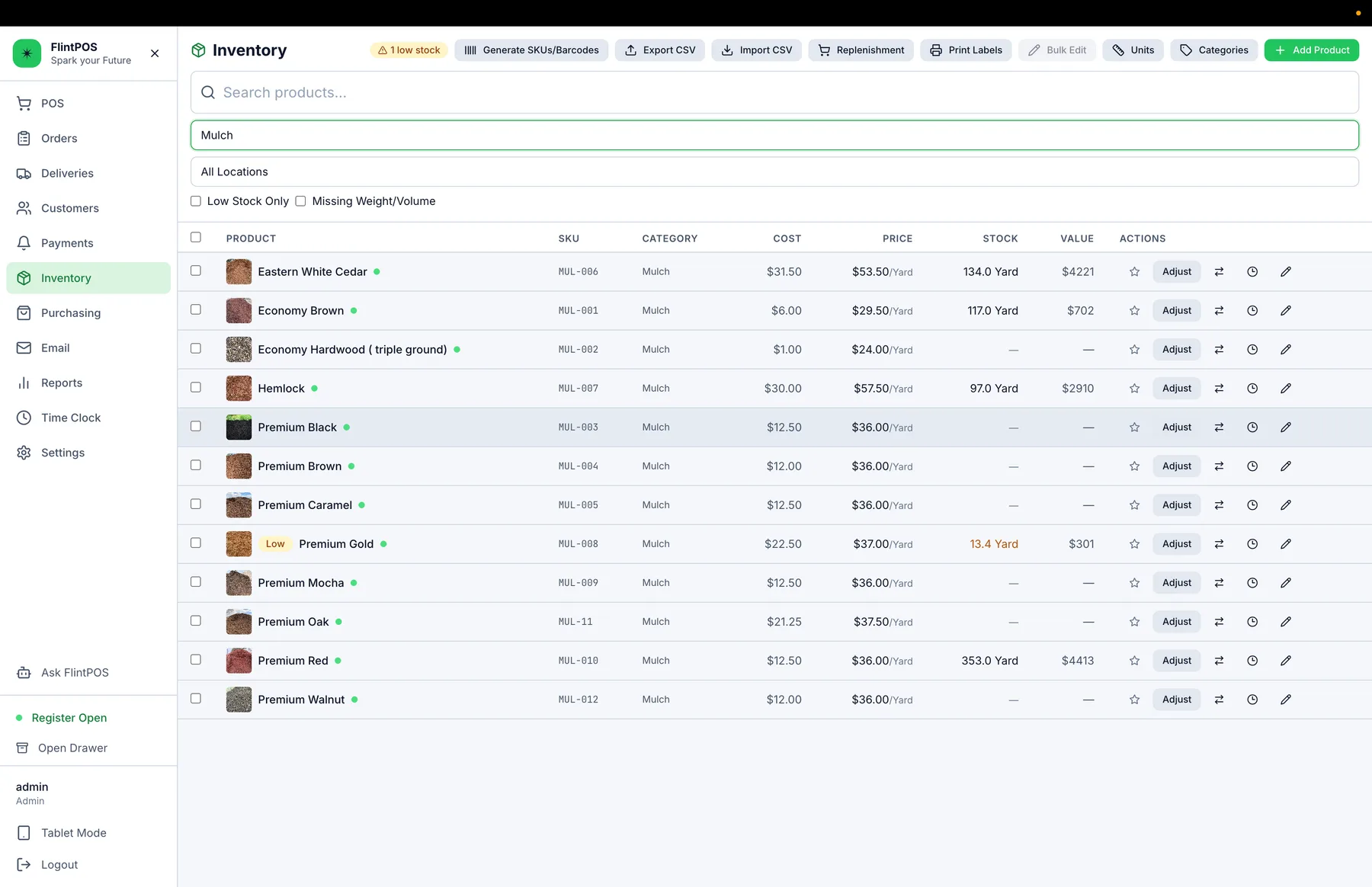
The workaround creates a messy catalog
Many POS systems expect one product to have one selling unit. If you sell topsoil by the cubic yard, half-yard, bag, and truckload, the common workaround is to create separate product records for each unit.
Duplicate records split sales reports and invite inconsistent inventory adjustments. They also complicate online-store sync. At checkout, staff must choose among near-identical records, and one wrong selection can change stock or price.
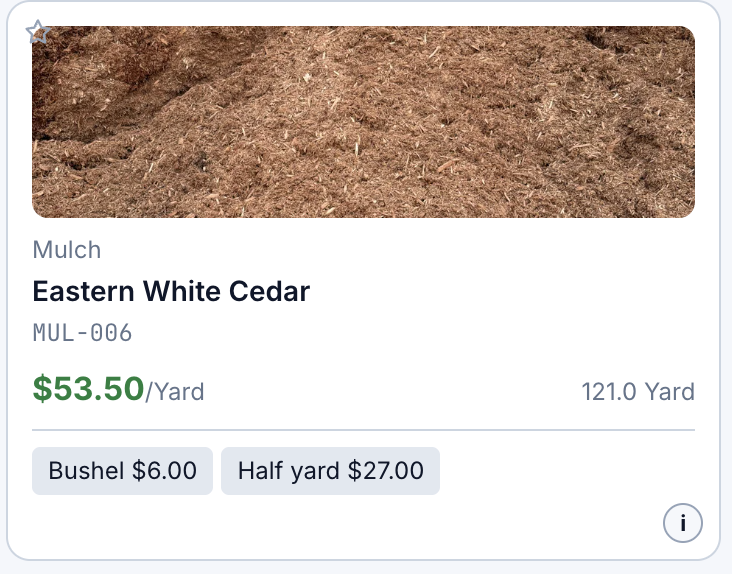
FlintPOS keeps alternate units on the product
FlintPOS stores a base unit on each product, then lets managers add alternate units of measure with a conversion factor and optional price override. For example, one product can sell in cubic yards while also supporting bags, scoops, pallets, or any custom unit your yard uses.
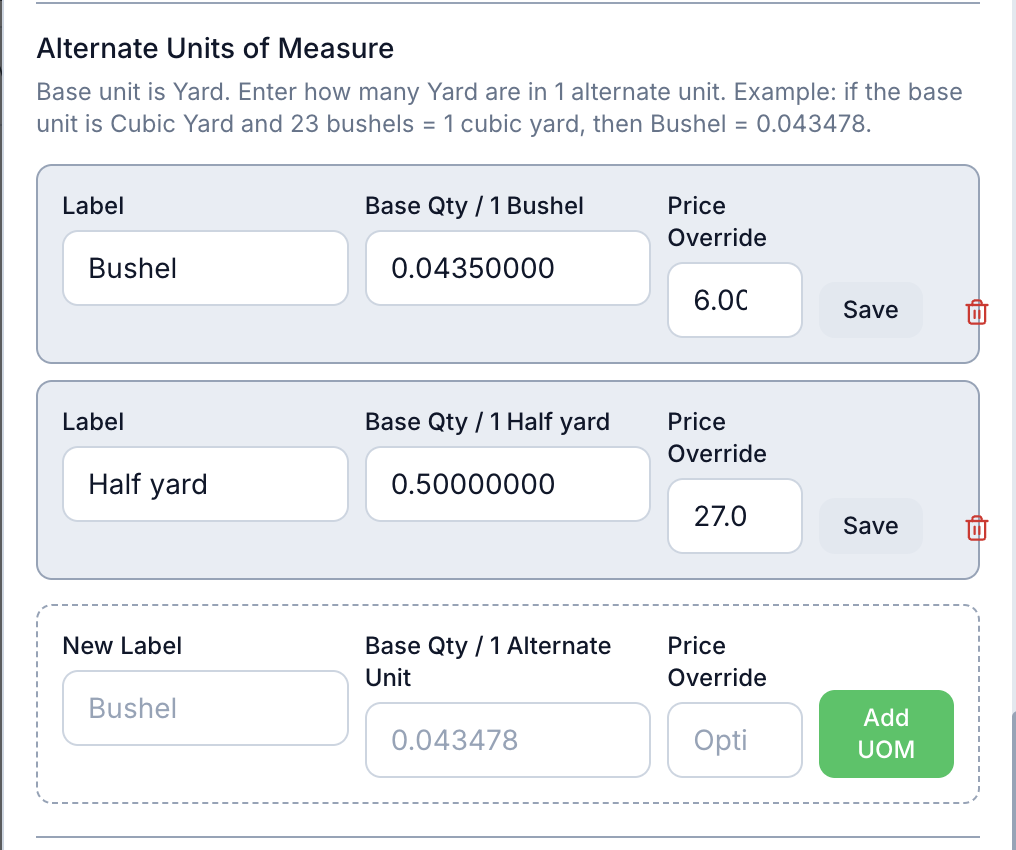
The POS, receipts, reports, purchase receiving, and WooCommerce sync use the same product identity.
Count inventory in the base unit
FlintPOS converts alternate-unit quantities to the product's base quantity for stock and reporting. The counter can sell a bag while the office continues to count that material in yards.
Keep one record for each material
Duplicate products create extra catalog work and split reporting. FlintPOS keeps each material's units, prices, and conversions on one product record.
Start Free Trial